
Step 1
Step 1Ingredients
Gather all the ingredients.
Cook mode
Tap ingredients as you go
Step 1
Step 1Gather all the ingredients.
Step 2
Step 2Before we start: Please note that 1 rice cooker cup is 180 ml, NOT 240 ml. 1 rice cooker cup of uncooked rice is 150 g (5.3 oz) and yields roughly 330 g (11. 6 oz) of cooked rice, which is roughly 1 ¾ US cups. One sushi roll requires 90-135 g or ½ – ¾ cup of sushi rice.
Step 3
Step 3Add water just enough until it submerges all the rice. Then discard the water immediately. Tip: Rice absorbs water very quickly when you start rinsing, so don't let it absorb the milky water.
Step 4
Step 4Use your fingers to gently wash the rice in a circular motion for 15-20 seconds.
Step 5
Step 5Add water and discard. Repeat this process a couple of times until the water is clear.
Step 6
Step 6When the water is almost clear, drain well. Tip: Use a fine-mesh sieve to drain and shake off excess water.
Step 7
Step 7Check the kombu to see if there is any dirt spot. If needed, gently wipe it off with a damp cloth (it's a traditional method but these days kombu is pretty clean). Do not wipe off the white powdery substance, which contribute to the umami flavor. NEVER wash the kombu!
Step 8
Step 8Put the well-drained rice in the rice cooker bowl and add measured water, or just under the 3-cup line. If your rice cooker has a "Sushi Rice" mode, add water up to that line. Place the kombu on top of the rice, let the rice soak in water for 20-30 minutes, and start cooking. If you don't have a rice cooker, cook rice in a pot over the stove, an instant pot, or a donabe with the amount of water I specified in this recipe. Tip: Since we'll be adding sushi vinegar to the cooked rice, the rice should be cooked a little bit on the firm side; therefore, the rice-to-water ratio for sushi rice should be 1 to 1 (instead of 1 to 1.1 or 1 to 1.2 for regular steamed rice).
Step 9
Step 9If you are not using a store-bought bottle of sushi vinegar (seasoned vinegar), follow this step. Combine rice vinegar, sugar, and salt in a small saucepan and bring it to a boil over medium-high heat. Whisk until the sugar is completely dissolved. You can also put the ingredients in a microwave-safe bowl and microwave for 1 minute, or till sugar is dissolved. Set aside to let it cool.
Step 10
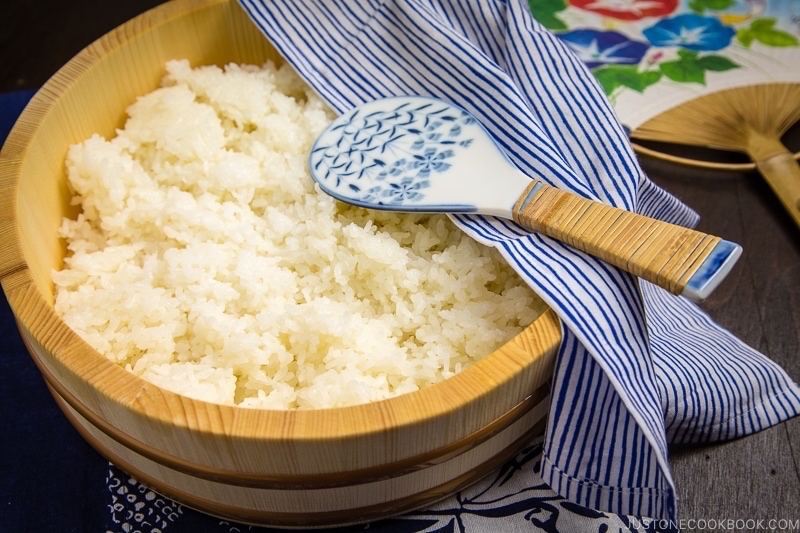
Step 10If using a wooden sushi oke (also called hangiri), moisten it by running it over water and drain well. You can also use a baking sheet lined with parchment paper. When the rice is cooked, discard the used kombu (or repurpose it to make simmered kombu) and transfer the cooked rice into the sushi oke. Spread out the rice evenly so it will cool faster. While it’s hot, pour sushi vinegar over the rice. Tip: If you're making more or less sushi rice, it's good. Take note that the required sushi vinegar for rice should be roughly 8-10% of the cooked rice weight.
Step 11
Step 11With a rice paddle, slice the rice at a 45-degree angle to separate the chunks of rice instead of mixing. At the same time, you need to use a fan to cool it so the rice will shine and doesn't get mushy.
Step 12
Step 12Then, gently flip the rice in between slices. Repeat this process until the rice is cooled to the temperature of human skin.
Step 13
Step 13Keep the sushi rice covered with a damp towel (or paper towel) for a few hours at room temperature. To keep for a longer time, see below.
Step 14
Step 14Rice gets harden and dry in the refrigerator. My recommendation is to put sushi rice in an airtight container and store it in the freezer for up to a month. You can defrost overnight in the fridge, and then microwave to room temperature (not hot). If you really want to refrigerate, cover the container with a thick kitchen towel, so the rice will stay cool and safe, but not become cold.
From Spoonjoy: https://spoonjoy.app/recipes/cleoutdru019zjj085g8smt0i
No cooks yet.